

 Academic Frontier
IF 16! Bioactive multifunctional hydrogel scaffold remodels the inflammatory microenvironment and osteoblast-osteoclast homeostasis, promoting the repair of osteoporotic bone defects
QQ Academic Group: 1092348845
Detailed
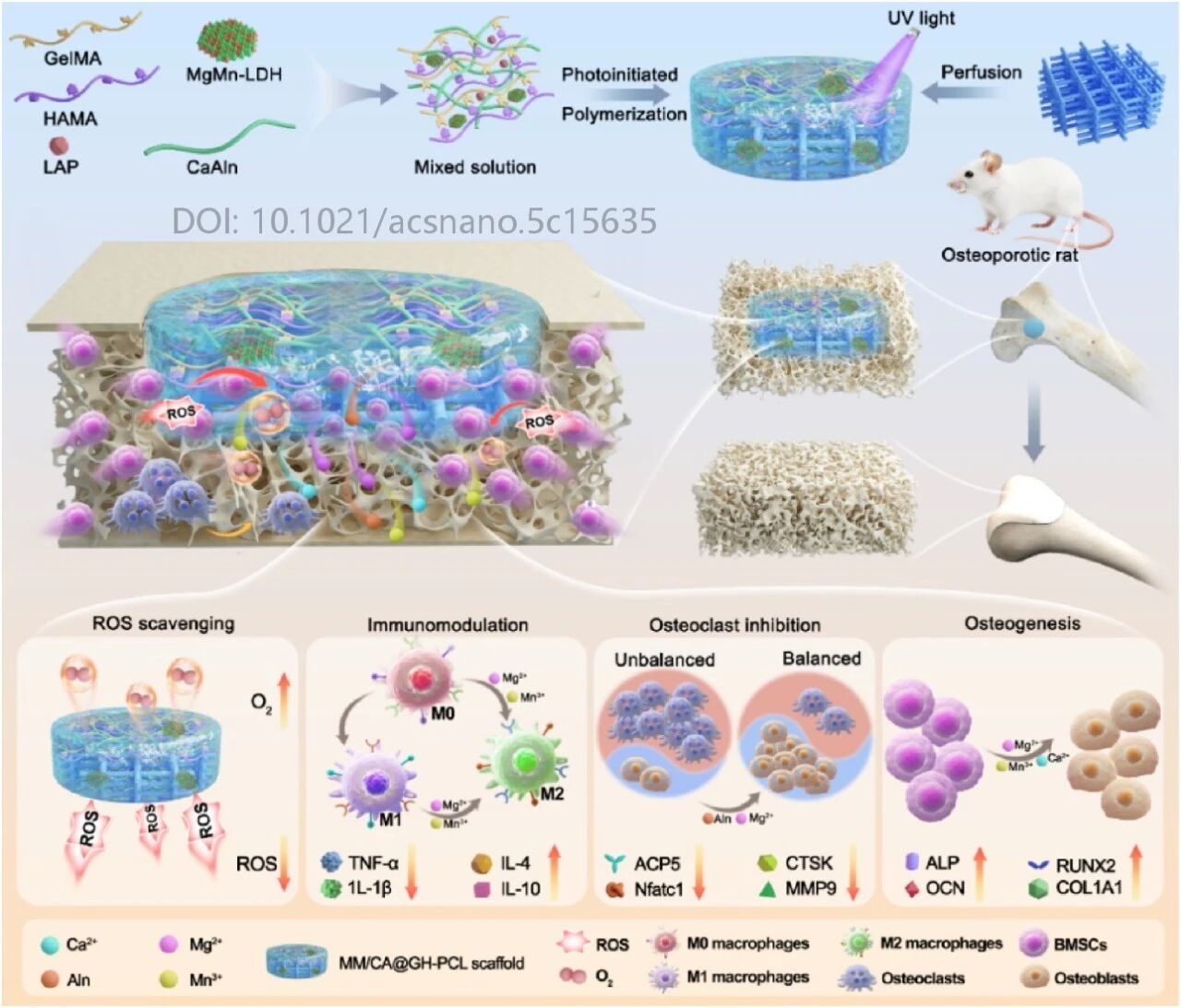
Repairing bone defects in patients with osteoporosis remains a major challenge due to imbalanced bone metabolism and the presence of high concentrations of reactive oxygen species in an inflammatory microenvironment. To address these issues, a 3D-printed bioactive multifunctional hydrogel scaffold was constructed, composed of a polycaprolactone skeleton and a gelatin/hyaluronic acid framework, which encapsulates MgMn layered double hydroxide nanosheets and calcium glycerophosphate nanowires within the framework to promote the repair of osteoporotic bone defects.The prepared hydrogel scaffold continuously removes excess reactive oxygen species and generates oxygen through multiple enzyme-mimicking catalytic activities (catalase, superoxide dismutase, lactase, and hydroxyl radical scavenging), regulates macrophage phenotypes, and reduces the expression of pro-inflammatory cytokines, thereby improving the inflammatory microenvironment and alleviating hypoxia. At the same time, the hydrogel scaffold continuously releases alendronate and Mg²⁺ ions to inhibit osteoclast activity, while the released bioactive ions (Mg²⁺, Ca²⁺, and Mn³⁺) enhance osteoblast activity and promote osteogenic differentiation, synergistically restoring the balance between osteoblasts and osteoclasts.Animal experiments showed that the hydrogel scaffold could restore the balance between osteoclasts and osteoblasts, and significantly accelerate the repair of bone tissue defects in osteoporotic rats through the synergistic effects of functional components implanted within the scaffold. These findings demonstrate the clinical potential of the customized hydrogel scaffold in addressing multiple complications of the pathological microenvironment and promoting the repair of osteoporotic bone defects.
Innovation Points
The core innovation of this study lies in the systematic application of Angiopep-2, a peptide traditionally used for targeting the blood-brain barrier, to the treatment of spinal cord injury for the first time. Through single-cell sequencing and immunofluorescence experiments, the study dynamically confirmed the specific high expression of its receptor LRP-1 after injury, thereby providing a precise targeting biological foundation for engineered extracellular vesicles (EVs). This strategy goes beyond the conventional passive delivery mode of EVs, achieving active recognition and homing to specific cell populations within the complex injury microenvironment, offering a new delivery tool in the field of neural repair that is both intelligent and highly efficient.
Original link
Bioactive Multifunctional Hydrogel Scaffolds Remodel the Inflammatory Microenvironment and Osteogenic-Osteoclastic Homeostasis to Promote Repair of Osteoporotic Bone Defects
ACS Nano ( IF 16 )
Pub Date : 2025-12-15
DOI: 10.1021/acsnano.5c15635
Zhenqiang Wang, Changjiang Gu, Yifan Tang, Xinjin Su, Demeng Xia, Quanwei Zhou, Zhi-Chao Xiong, Ying-Jie Zhu, Xiongsheng Chen
- Previous: IF 26.8! A PROTAC-base
- Next: Bioactive Materials|离子


